There is something almost magical about the sound of kernels hitting the lid of a pot — a rapid-fire percussion that means something good is about to happen. Stovetop popcorn is one of those old-fashioned skills that never goes out of style, and once you make it at home, the microwave bag starts to feel like a serious downgrade.
Whether you are setting up for movie night, game day, or just need a quick snack that does not come with a side of mystery ingredients, learning how to make stovetop popcorn is one of the most worthwhile five minutes you will spend in your kitchen. This guide covers everything: the right pot, the right oil, the right heat, and a handful of seasoning ideas to make every bowl your best yet.
And yes — it starts with the corn itself. Not all kernels are created equal, and the best stovetop popcorn recipe begins long before you turn on the stove.
Why Stovetop Popcorn Beats the Microwave Bag Every Time
If you have only ever made popcorn from a microwave bag, you might not know what you have been missing. Stovetop popcorn delivers a noticeably better texture — crunchier, lighter, and less rubbery — and gives you total control over what goes into your bowl. Here is why the switch is worth it:
• No mystery additives. Microwave popcorn bags often contain artificial flavors, preservatives, and chemical coatings that have no business being in a snack. Stovetop popcorn can be made with just three ingredients: kernels, oil, and salt.
• Better flavor. Real butter, good salt, and fresh oil taste nothing like the synthetic ‘butter flavoring’ in a bag.
• Customizable every time. Sweet, savory, spicy — your stovetop bowl can go anywhere your taste buds want.
• More economical. A bag of organic kernels makes far more popcorn at a fraction of the cost per serving.
• Cleaner ingredients. When you start with a clean kernel — no pesticides, no GMOs — the whole snack is cleaner. That matters.
This is the snack it always should have been. And it takes about five minutes to make.
It Starts With the Kernel: Why Quality Corn Matters

The best stovetop popcorn recipe in the world cannot fix a bad kernel. Conventional popcorn is one of the most heavily sprayed crops in America — treated with synthetic pesticides, herbicides, and fertilizers that you would rather not think about while you are enjoying a movie.
That is why every kernel of Olde World Popcorn is grown by Doudlah Farms, a seventh-generation certified organic family farm in Evansville, Wisconsin. Their corn is:
• USDA Organic certified
• Non-GMO verified
• Grown without synthetic pesticides, herbicides, or fertilizers
• Whole grain and gluten-free
• Available in white (light and delicate) and yellow (traditional, corny flavor)
The difference shows up in your bowl. Cleaner corn pops more completely, tastes fresher, and lets the seasoning shine without competing with any off-flavors from chemical residue.
Ready to start with the best? Shop Olde World Popcorn kernels here.
What You Need to Make Stovetop Popcorn
The Right Pot
A heavy-bottomed pot with a lid is the single most important piece of equipment. You want:
• A 3 to 4-quart pot (or larger) with a tight-fitting lid. A pot that is too small will cause kernels to overflow when popped.
• Heavy bottom construction. Cast iron, stainless steel with a thick base, or a good Dutch oven all work beautifully. Thin pots create hot spots and burn the bottom kernels before the rest pop.
• A lid that fits. Steam and heat need to stay in the pot — a loose-fitting lid leads to soggy popcorn.
Some people love a dedicated popcorn pot with a crank handle that keeps kernels moving. Totally optional, but fun if you pop regularly.
The Right Oil
Not all oils behave the same at popcorn-popping temperatures (around 400-460°F). The best oils for stovetop popcorn are:
• Refined coconut oil — the classic choice. High smoke point, neutral flavor, and it gives popcorn that perfect movie-theater-adjacent quality.
• Avocado oil — high smoke point, neutral flavor, excellent for clean-eating snackers.
• Sunflower or safflower oil — light, neutral, affordable, and widely available.
• Grapeseed oil — neutral flavor with a high smoke point.
Avoid olive oil for stovetop popcorn — its lower smoke point means it burns before your kernels pop, leaving a bitter taste. Save it for your salads.
The Best Stovetop Popcorn Recipe: Step-by-Step
This is a foundational recipe that works for 1/2 cup of kernels, which produces a large bowl — enough for 2 to 4 people.
Ingredients
• 1/2 cup Olde World Popcorn kernels (white or yellow)
• 3 tablespoons refined coconut oil (or avocado oil)
• 1/2 teaspoon fine sea salt (adjust to taste)
Instructions
1. Add the oil to a heavy-bottomed pot. Set the burner to medium-high heat.
2. Test the heat: add 3 kernels to the pot and cover with the lid. When all three kernels pop, your oil is at the right temperature. This is the most important step — it ensures every kernel pops evenly.
3. Add the remaining kernels in a single layer. Put the lid back on immediately.
4. Gently shake the pot every 20 to 30 seconds, keeping the lid cracked just slightly to let steam escape. This prevents soggy popcorn.
5. Listen carefully. When the popping slows to about 2 seconds between pops, remove the pot from heat. Do not wait for complete silence — the residual heat will continue popping kernels and can burn the bottom ones.
6. Pour into a large bowl immediately. Season with sea salt and any additional toppings while warm so they stick.
Pro tip: Keep the lid cracked just a hair during the final minute of popping. That tiny gap lets moisture escape, which is the secret to crunchy (not chewy) stovetop popcorn.
Seasoning Ideas: From Simple Salt to Something Special
One of the best things about homemade popcorn is that your bowl is a blank canvas. Here are some proven combinations to try:
Classic & Simple
• Sea salt and real butter — melt butter separately and drizzle over hot popcorn. The only upgrade the classic needs.
• Nutritional yeast and sea salt — a surprisingly good cheesy-savory combo that also happens to be plant-based.
• Garlic powder and parmesan — add both immediately after pouring into the bowl while the popcorn is hot.
Spicy & Bold
• Chili lime: mix 1 tsp chili powder, 1/2 tsp cumin, zest of one lime, and sea salt. Drizzle with a little avocado oil first so the spices stick.
• Smoked paprika and black pepper — simple, smoky, satisfying.
• Cayenne and honey: drizzle warm honey over the popcorn, then dust with cayenne for a sweet-heat bowl that disappears fast.
Sweet & Indulgent
• Cinnamon sugar: mix 2 tsp sugar with 1/2 tsp cinnamon and a pinch of salt. Drizzle with melted coconut oil first, then dust.
• Dark chocolate drizzle: melt 2 oz dark chocolate, drizzle over a finished bowl, add a pinch of flaky salt. Let cool for 2 minutes before serving.
• Vanilla maple: a drizzle of real maple syrup and a splash of vanilla extract, tossed while warm.
The key with any seasoning: add it while the popcorn is hot, toss quickly to coat, and taste as you go. Popcorn over-seasons easily — start with less than you think you need.
White vs. Yellow: Which Kernel Makes Better Stovetop Popcorn?
Both white and yellow varieties of Olde World Popcorn make excellent stovetop popcorn — but they eat a little differently.
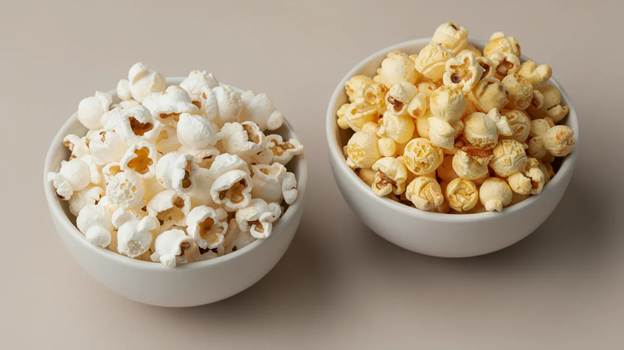
White popcorn kernels pop into lighter, more tender flakes with a delicate flavor. They are great for sweet applications and more refined seasonings where you want the topping to be the star. Yellow kernels pop up bigger and fluffier with a more pronounced corn flavor that stands up beautifully to bold, savory seasonings like chili lime or smoked paprika.
The honest answer? Both are great. Try them side by side and let your taste buds settle the debate.
Browse white and yellow kernels at Olde World Popcorn.
Troubleshooting Common Stovetop Popcorn Problems
Too many unpopped kernels
This usually means the oil was not hot enough when you added the kernels. Use the 3-kernel test every time — it guarantees the right temperature before you commit the full batch.
Burnt popcorn
Heat was too high, or you waited too long after popping slowed down. Remove the pot from heat when there are 2 to 3 seconds between pops, not when it has gone completely silent.
Chewy or soggy popcorn
Steam is the enemy of crunch. Crack the lid slightly during popping to let moisture escape, and pour the finished popcorn into a bowl immediately — do not let it sit in the pot.
Uneven popping
The pot is too small, or the kernels are stacked too deep. Use a pot large enough for the kernels to sit in roughly a single layer before popping.
Why Clean Popcorn Is the Smarter Snack
Popcorn made from quality organic kernels is genuinely one of the better snack choices you can make. A serving of air-popped or stovetop popcorn (made without excessive butter or oil) is:
• Whole grain — one of the few snack foods that qualifies
• High in fiber — supports digestion and satiety
• Rich in antioxidants — popcorn contains polyphenols, the same class of compounds found in berries and dark chocolate
• Naturally gluten-free and plant-based
• Low in calories per cup compared to chips, crackers, or pretzels
The catch? Most commercial popcorn — even many ‘organic’ brands — is grown with conventional agricultural practices, processed with additives, or popped in oils with long lists of chemical stabilizers. What your popcorn is made from matters as much as what it is.
That is the whole reason Olde World Popcorn exists: clean food should not be a luxury. One ingredient. One farm. One seriously good snack.
Ready to Pop? Here Is How to Get Started
The best stovetop popcorn you will ever make starts with the best kernel you can buy. Olde World Popcorn is 100% sourced from Doudlah Farms in Wisconsin — seventh-generation farmers who have been certified organic for over 15 years and whose corn is tested clean from synthetic pesticides and herbicides.
No other source. No shortcuts. Just the best corn in the Midwest, shipped directly to your bowl.
Order your first bag of Olde World Popcorn today — and pop your first stovetop batch tonight.
Frequently Asked Questions About Best Stovetop Popcorn Recipe
What is the best oil for the best stovetop popcorn recipe?
The best oils for stovetop popcorn are refined coconut oil, avocado oil, sunflower oil, and grapeseed oil. These oils have high smoke points (above 400°F) that can handle the heat required to pop corn without burning. Refined coconut oil is the most popular choice for its neutral flavor and the slightly rich, buttery quality it adds to finished popcorn. Avoid extra-virgin olive oil, which has a lower smoke point and will burn before your kernels fully pop.
How much oil should I use for stovetop popcorn?
Use approximately 3 tablespoons of oil for every 1/2 cup of kernels. This ratio provides enough fat to coat the bottom of the pot and conduct heat evenly to every kernel without making the finished popcorn greasy. If you prefer a lighter result, 2 tablespoons will still work — the popcorn will just be slightly less rich.
Why does my stovetop popcorn burn on the bottom?
Stovetop popcorn burns on the bottom when the heat is too high or when you leave the pot on the burner after popping has slowed. The fix: use medium-high heat (not high), shake the pot every 30 seconds to keep kernels moving, and remove the pot from heat as soon as popping slows to 2 to 3 seconds between pops. Residual heat in the pot will continue popping remaining kernels after you pull it off the burner.
What is the ratio of kernels to popped popcorn?
As a general rule, 1/2 cup of unpopped popcorn kernels yields approximately 15 to 16 cups of popped popcorn — enough for 3 to 4 generous servings. If you are cooking for a crowd, 1 cup of kernels will fill a very large bowl. Start with less than you think you need; popcorn expands dramatically and takes up far more volume once popped.
Is stovetop popcorn healthier than microwave popcorn?
Yes, stovetop popcorn is generally healthier than microwave bag popcorn. Microwave popcorn bags often contain artificial butter flavoring, preservatives, partially hydrogenated oils, and chemical coatings on the bag itself that can transfer to the food when heated. Stovetop popcorn made with clean kernels, a quality oil, and real salt contains none of those additives. The base snack — whole grain, high fiber, naturally gluten-free corn — is the same. The difference is everything around it.
What makes organic popcorn kernels different from conventional?
Organic popcorn kernels are grown without synthetic pesticides, herbicides, or fertilizers, and are non-GMO by certification. Conventional popcorn is one of the most heavily sprayed crops in the U.S. food supply. USDA Organic certification requires that crops meet strict growing standards verified by a third-party certifier. Olde World Popcorn sources exclusively from Doudlah Farms, which holds USDA Organic and Non-GMO certifications and applies farming practices that go even beyond standard organic requirements.
How do I keep stovetop popcorn from getting soggy?
To prevent soggy stovetop popcorn, crack the lid slightly during the final minute of popping so steam can escape, and immediately transfer the finished popcorn from the hot pot to a large open bowl. Letting popcorn sit in a covered pot traps steam and softens the texture quickly. Season immediately after transferring, then eat while warm for peak crunch.
Can I use Olde World Popcorn in an air popper?
Yes. Olde World Popcorn kernels work in any popping method including stovetop, air popper, and microwave-safe bowls. Each method produces slightly different results: stovetop popcorn tends to be richest and crunchiest, while air-popped has the lightest texture and lowest fat content. For the most flavorful result with full control over ingredients, stovetop remains the preferred method.