Popcorn feels like a modern snack — something invented for movie theaters and microwaves. But the history of popcorn stretches back thousands of years, making it one of the oldest snack foods on Earth. Long before the first megaplex sold a bucket of the stuff, ancient civilizations were popping corn over open fires, wearing it as jewelry, and even offering it to their gods.
If you have ever wondered when was popcorn invented, or where this beloved snack actually came from, you are in for a wild ride. The story of popcorn is the story of corn itself — and it is far older, stranger, and more fascinating than most people realize.
At Olde World Popcorn, we think great popcorn deserves a great story. Here it is.
How Old Is Popcorn, Really?
The short answer: very, very old.
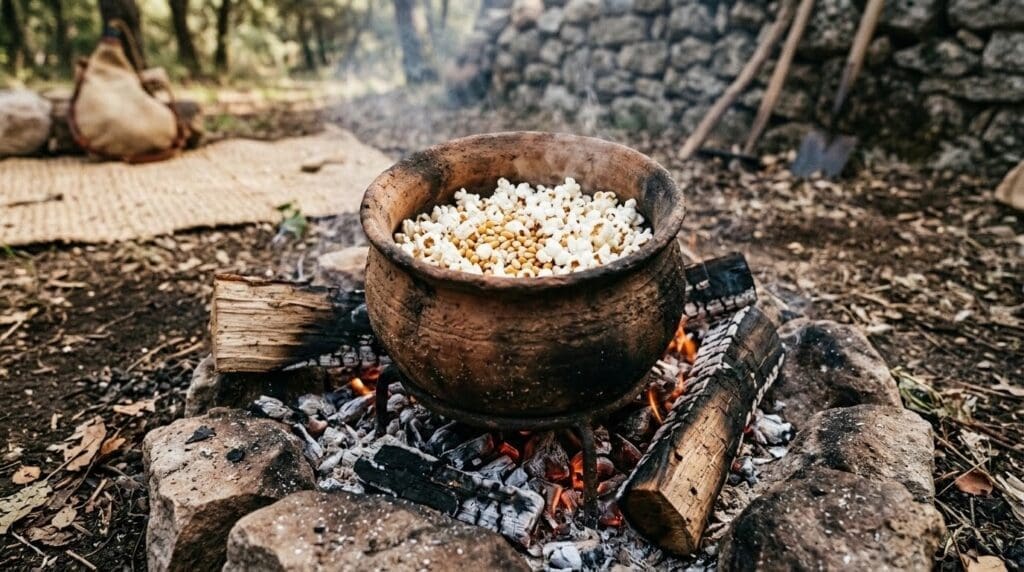
Archaeological evidence suggests that popcorn has been around for at least 5,000 to 7,000 years. Researchers have found ancient popcorn remains in the coastal regions of Peru dating back to around 4700 BCE — that is more than six thousand years ago. These were not just dried corn kernels; microscopic analysis confirmed they had actually been popped.
But that is not even the oldest evidence. Fossil pollen samples identified as corn pollen have been found beneath Mexico City, dating back roughly 80,000 years. While ancient corn and modern popcorn are very different plants, it suggests the long-standing relationship between humans and maize reaches back to a time that stretches far beyond recorded history.
The oldest directly identified popped kernels — actual pieces of popped corn — were found in the Bat Cave of west-central New Mexico in 1948. Those kernels were carbon-dated to around 3600 BCE, making them roughly 5,600 years old. They looked strikingly similar to the fluffy white popcorn you might make on your stove tonight.
Where Did Popcorn Originate?
The Americas: Birthplace of Corn and Popcorn
All evidence points to the Americas as the birthplace of popcorn. Corn itself was first domesticated from a wild grass called teosinte in what is now southern Mexico, somewhere between 9,000 and 10,000 years ago. As humans selectively cultivated corn over generations, different varieties developed — including the flint-kerneled varieties that pop when heated.
Ancient peoples across Mesoamerica and South America discovered that certain varieties of dried corn would expand dramatically when exposed to high heat. The science behind it is simple: each kernel contains a small amount of water inside a hard starch shell. When heated, that moisture turns to steam, pressure builds, and — pop — the kernel explodes and turns inside out, creating the fluffy snack we know today.
The Aztecs and Popcorn: More Than a Snack
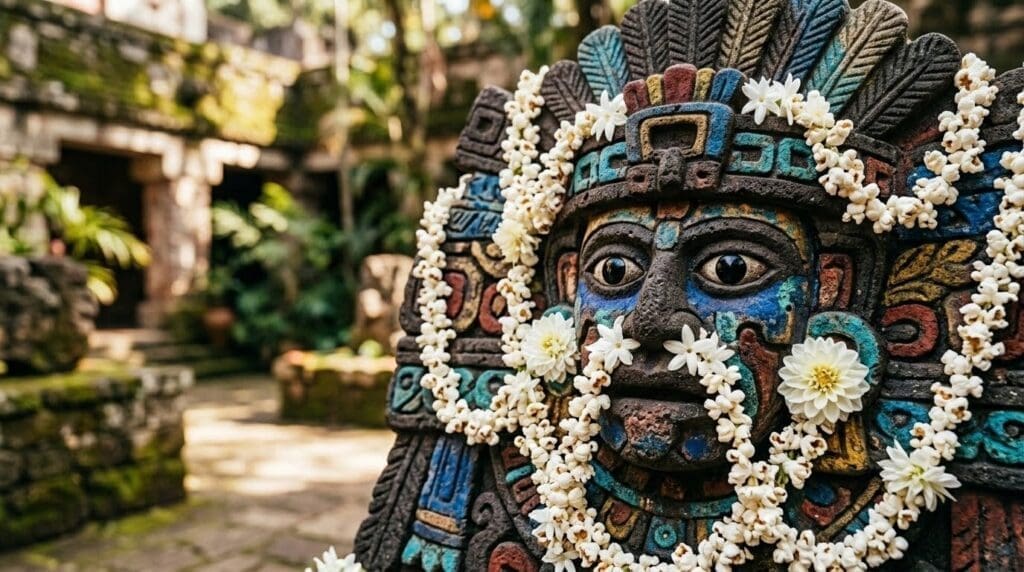
When Spanish conquistadors arrived in the Americas in the early 1500s, they were astonished by what they found. Explorer Hernán Cortés encountered the Aztecs using popcorn not just as food, but as ceremonial ornamentation and religious offering.
The 16th-century Franciscan friar Bernardino de Sahagún documented Aztec ceremonies in which popcorn was used to decorate statues of Tlaloc, the god of rain and fertility. Young girls wore garlands of popcorn around their heads during these ceremonies. Popcorn was a sacred food — connected to abundance, rain, and the harvest.
It was one of the first times Europeans encountered popcorn — and they were fascinated. Cortés described it to the Spanish court as a corn that ‘bursts open’ when cooked.
Popcorn Facts: Ancient Cultures That Loved the Pop
Indigenous North American Tribes
Long before European contact, Indigenous tribes across North America had been enjoying popcorn for centuries. The Iroquois, who lived in the Great Lakes region, reportedly popped corn in clay pots filled with heated sand. The popped kernels would float to the surface when ready — a method that is primitive in its tools but entirely logical in its approach.
In 1621, English colonists at Plymouth reported that a Wampanoag man named Quadequina brought a deerskin bag of popped corn to the first Thanksgiving feast — the first time many of the colonists had ever seen the snack. Whether or not every detail of that story is accurate, historical records do confirm that popcorn was already deeply embedded in Indigenous food culture long before European arrival.
Popcorn in Peru and South America
The coastal civilizations of Peru were among the earliest confirmed poppers of corn. Archaeologists excavating burial sites along the Peruvian coast in the 1940s and again in the 2000s found kernels of popped corn preserved alongside mummified remains. The dry coastal climate preserved them with extraordinary detail — you can still see the starched white interior of a kernel that popped thousands of years ago.
These findings pushed back the known history of popcorn significantly and confirmed that popcorn was a food of cultural importance, not just a casual snack.
When Did Popcorn Come to America — and the World?
Colonial America and the 1800s
After European contact with the Americas, corn spread quickly across the globe via trade routes. But popcorn as a widely popular snack in the United States really took hold in the 19th century.
By the mid-1800s, popcorn was being sold by street vendors across American cities. It was cheap, filling, easy to make, and irresistible. The invention of the first steam-powered popcorn machine by Charles Cretors in Chicago in 1885 changed everything. Suddenly, popcorn could be made and sold in large quantities on street corners, at fairs, and at carnivals. The modern popcorn industry was born.
Popcorn and the Movie Theater
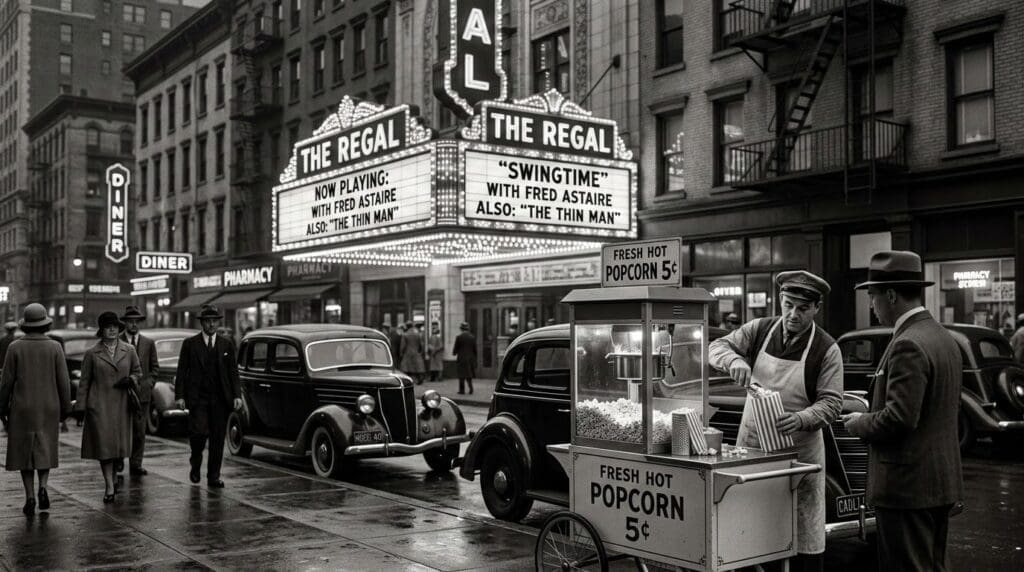
Here is a popcorn fact that surprises most people: movie theaters originally did not sell popcorn at all. When motion pictures emerged in the early 1900s, theater owners considered themselves purveyors of high culture. They did not want the noisy, messy snack anywhere near their plush carpets.
Then came the Great Depression. Popcorn was one of the few affordable luxuries at five to ten cents a bag. Street vendors began selling it outside theaters, and entrepreneurs started sneaking popcorn into lobbies. Eventually, theater owners realized they were missing out on enormous profit and began installing their own popcorn machines. By the late 1930s, popcorn and movies were inseparable — and have been ever since.
World War II and the Popcorn Surge
During World War II, sugar was rationed, which meant candy and other sweets were in short supply. Americans turned to popcorn as their snack of choice, consuming three times more than usual. This wartime surge cemented popcorn’s place as the quintessential American snack — and the habit stuck long after rationing ended.
What Makes Popcorn Pop? A Quick Look at the Science
Every popcorn kernel is a tiny pressure vessel. Inside the hard outer shell — called the pericarp — sits a starchy interior with a small amount of water (typically 13–14% moisture content is ideal for popping). When the kernel reaches about 356–400°F (180–204°C), the water converts to steam faster than it can escape through the shell.
The pressure builds until the pericarp fails — and then the kernel explodes, turning inside out. The starchy interior puffs and solidifies into the irregular white shape we recognize as popped corn. The whole process takes less than a second per kernel.
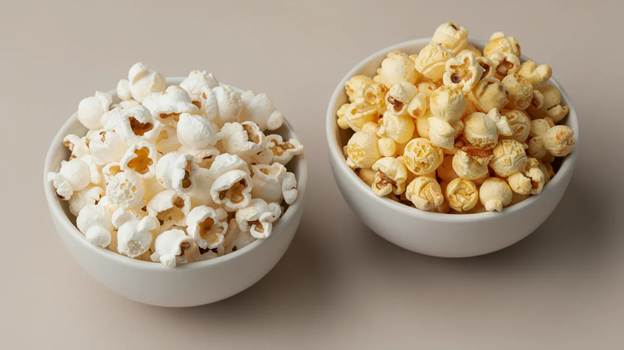
Different corn varieties pop differently. Butterfly (or snowflake) popcorn creates the irregular, wing-like shapes most commonly seen in movie theaters and home popcorn. Mushroom popcorn creates denser, rounded shapes better suited for coatings like caramel or chocolate. At Olde World Popcorn, our organic white and yellow kernels are grown specifically for their popping quality — yielding fluffy, full-bodied pops with a satisfying crunch.
From Ancient Fields to Your Bowl: Why Corn Quality Still Matters
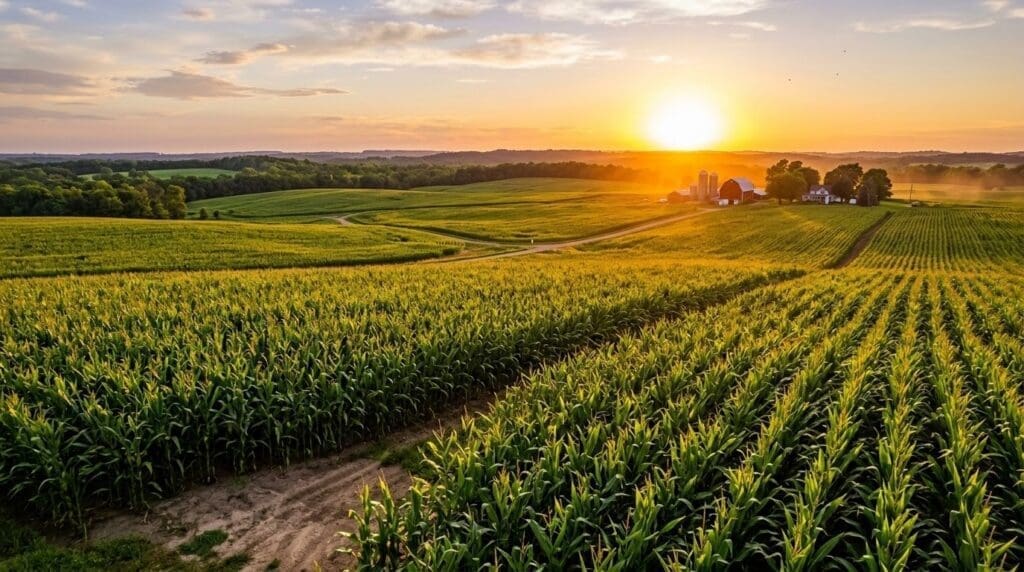
Thousands of years of popcorn history have one consistent thread: the quality of the corn matters. Ancient civilizations selected and cultivated the best popping varieties over generations. Today, the same principle applies — just with modern agricultural knowledge layered on top.
At Olde World Popcorn, every kernel is sourced from Doudlah Farms — a seventh-generation certified organic family farm in Evansville, Wisconsin, with over 15 years of organic certification. No synthetic pesticides, no herbicides, no GMOs. The corn is grown in clean Wisconsin soil, tested rigorously, and sold to you as close to the source as possible.
Conventional popcorn is one of the most heavily sprayed crops in America. Pesticide residues on corn intended for popping are a largely invisible problem — one that most brands do not talk about because it does not serve their marketing interests. Choosing certified organic popcorn is not just a preference; it is a meaningful choice for your health and for the farmers who grow your food.
The ancient Aztecs treated popcorn as sacred. We think that spirit of reverence — for the corn, the soil, and the people who tend it — is still exactly right.
Fun Popcorn Facts Worth Knowing
• January 19 is National Popcorn Day in the United States.
• Americans eat approximately 17 billion quarts of popcorn every year — about 52 quarts per person.
• Nebraska produces more popcorn than any other state in the U.S., though Wisconsin-grown organic varieties like those from Doudlah Farms are among the cleanest available.
• The world’s oldest popped popcorn, found in New Mexico, is roughly 5,600 years old.
• One popcorn kernel can expand to 30–50 times its original size when popped properly.
• The word ‘popcorn’ first appeared in print in John Russell Bartlett’s 1848 Dictionary of Americanisms.
• Unpopped kernels are called ‘old maids’ or ‘spinsters’ in popcorn industry slang.
Frequently Asked Questions About the History of Popcorn
When was popcorn invented?
Popcorn was not invented in the traditional sense — it was discovered. The earliest confirmed evidence of popped corn comes from archaeological sites in Peru dating to approximately 4700 BCE, making popcorn at least 6,700 years old. Ancient peoples across Mesoamerica and South America were popping corn long before European contact with the Americas.
What is the history of popcorn in America?
Indigenous peoples across North America had been eating popcorn for centuries before European settlers arrived. The snack entered mainstream American culture in the 19th century, with street vendors selling it widely by the 1850s. The invention of the steam-powered popcorn machine in 1885 industrialized its production, and by the late 1930s, popcorn had become the defining snack of the American movie theater experience.
Did the Aztecs eat popcorn?
Yes. The Aztecs used popcorn extensively — both as food and in religious ceremonies. Historical accounts from Spanish conquistadors in the early 1500s document Aztec ceremonies in which popcorn was used to decorate statues of the rain god Tlaloc and worn as garlands by young women during harvest rituals. Popcorn held sacred significance in Aztec culture.
What is the oldest popcorn ever found?
The oldest directly verified popped corn was found in the Bat Cave of New Mexico and carbon-dated to approximately 3600 BCE — about 5,600 years old. However, popcorn remains found in coastal Peru have been dated even earlier, to around 4700 BCE, making those the oldest known evidence of popcorn consumption.
Why did popcorn become popular in movie theaters?
Popcorn became associated with movie theaters largely due to economic necessity during the Great Depression. When theaters struggled financially in the 1930s, cheap popcorn sold by vendors outside (and eventually inside) theaters became a lifeline. Theater owners eventually embraced popcorn concessions as a major revenue source, and the combination of movies and popcorn has remained culturally inseparable ever since.
Is organic popcorn healthier than conventional popcorn?
Certified organic popcorn, like the kernels sold by Olde World Popcorn, is grown without synthetic pesticides, herbicides, or GMOs. Conventional popcorn corn is among the most heavily sprayed crops in the U.S., which means residue risk is a real concern with non-organic varieties. Beyond the absence of chemicals, organic popcorn grown in healthy soil tends to produce denser, better-tasting kernels. For a deeper look, see our guide to whether popcorn is a healthy snack.
What makes popcorn kernels pop?
Each popcorn kernel contains a small amount of water inside a hard starch shell called the pericarp. When heated to approximately 356–400°F, the water converts to steam and builds pressure until the shell fails. The starchy interior explodes outward and solidifies into the fluffy popped corn shape. Kernels with 13–14% moisture content pop most reliably and fully.
The Bottom Line: Popcorn Has Always Been Worth Celebrating
From ancient Peruvian burial sites to the Aztec temples of Mexico to the Great Depression-era movie house — popcorn has survived thousands of years because it is genuinely great. It is simple, satisfying, versatile, and deeply tied to human culture across continents and centuries.
At Olde World Popcorn, we think a snack with that kind of history deserves to be made with real care. That means sourcing exclusively from a certified organic family farm, skipping the pesticides and GMOs, and letting a truly great kernel speak for itself.
The ancients were onto something. Pure popcorn, pure fun — it has always been that simple.
Ready to taste the difference? Shop Olde World Popcorn and get organic, non-GMO kernels straight from a Wisconsin family farm — shipped directly to your door.